Other names: Black-seed Squash, Cidra, Fig-leaf Gourd, Malabar Gourd, Pie Melon, Sidra, Thai Marrow
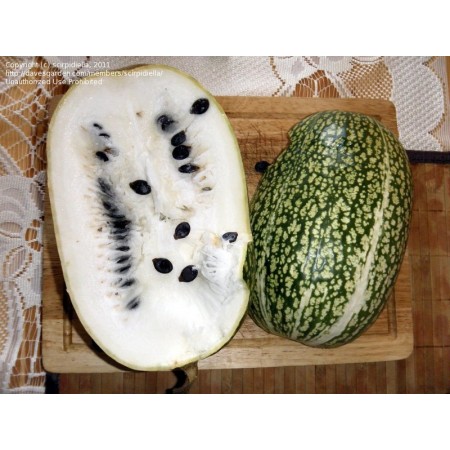
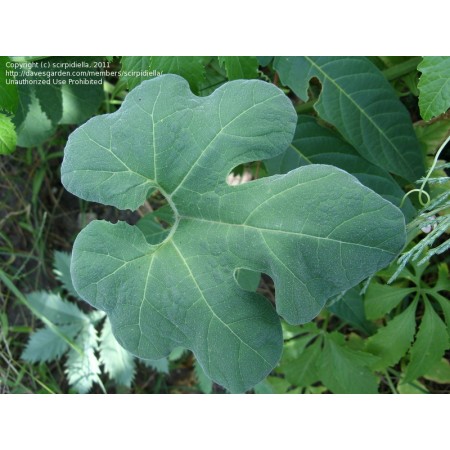
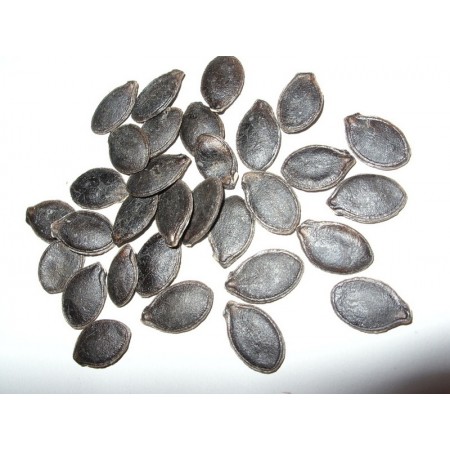
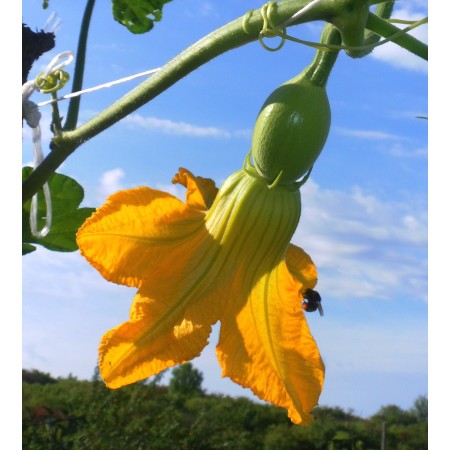
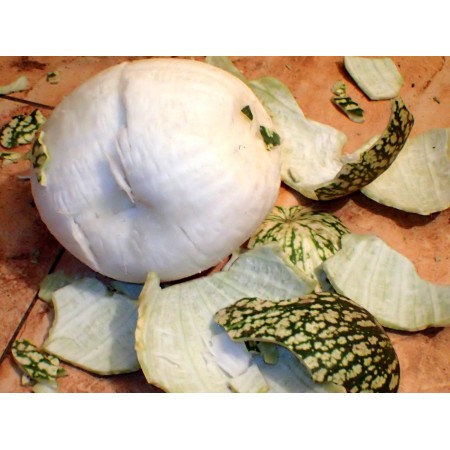
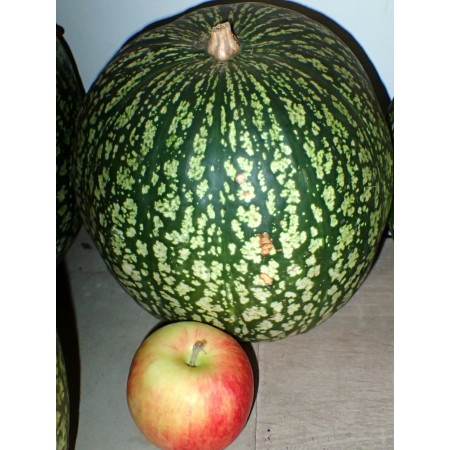
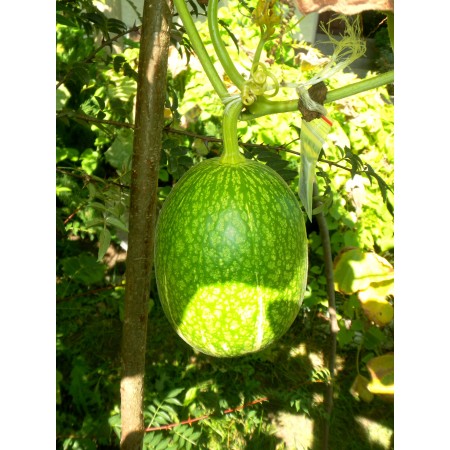
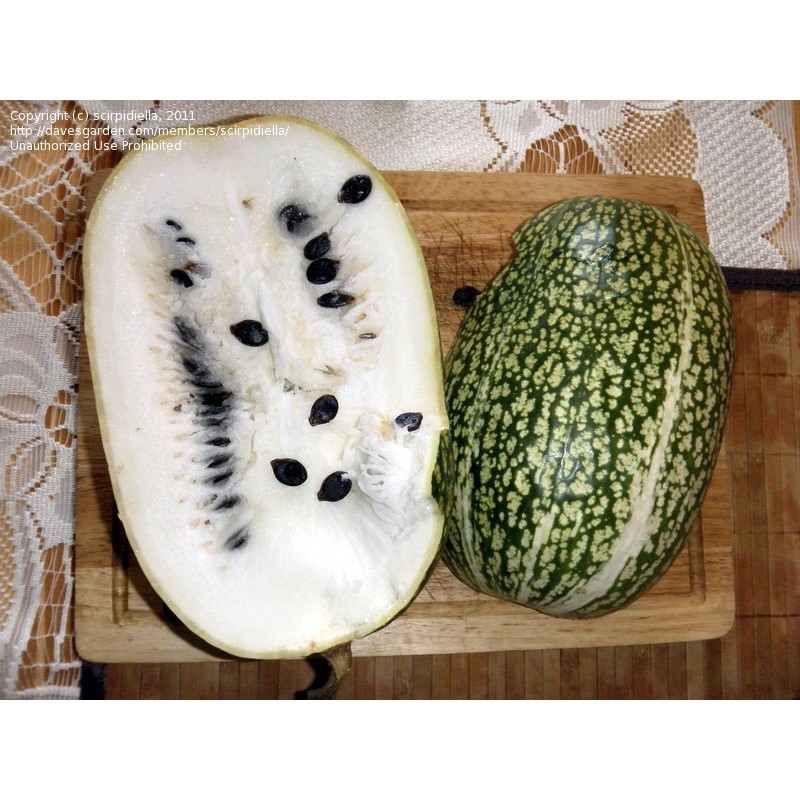
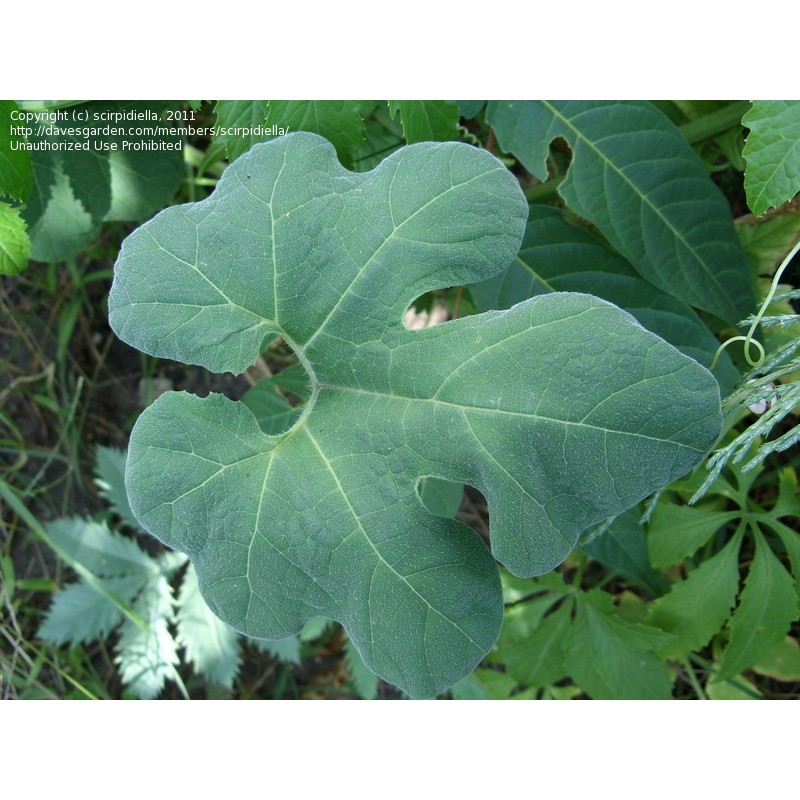
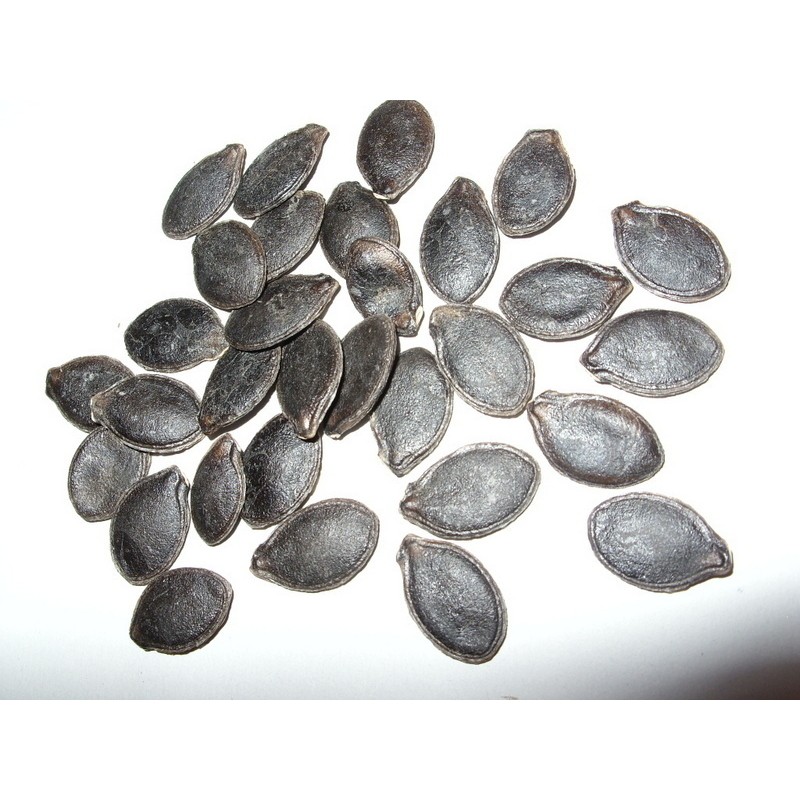
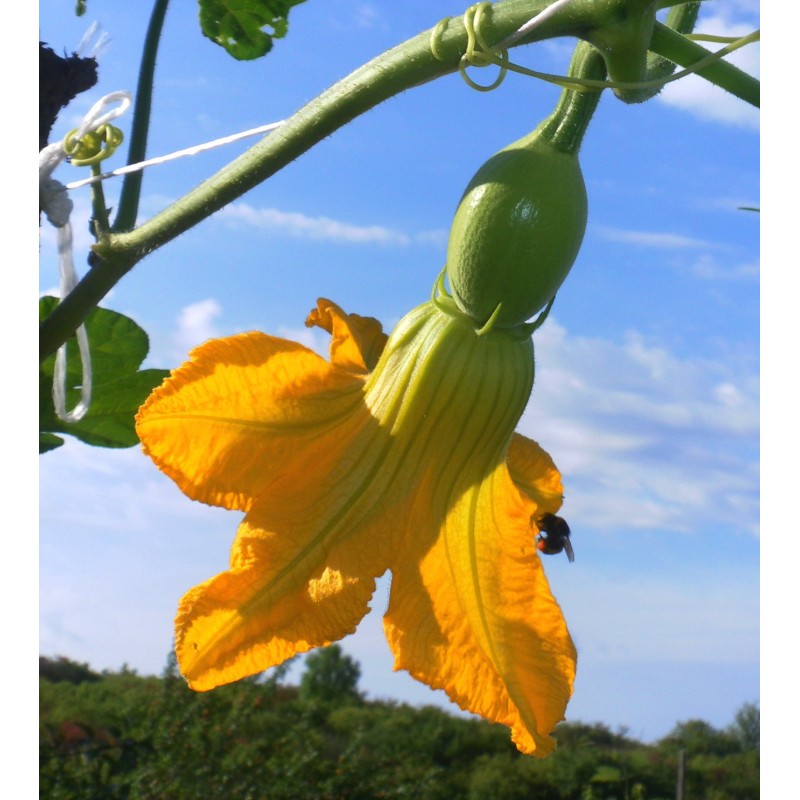
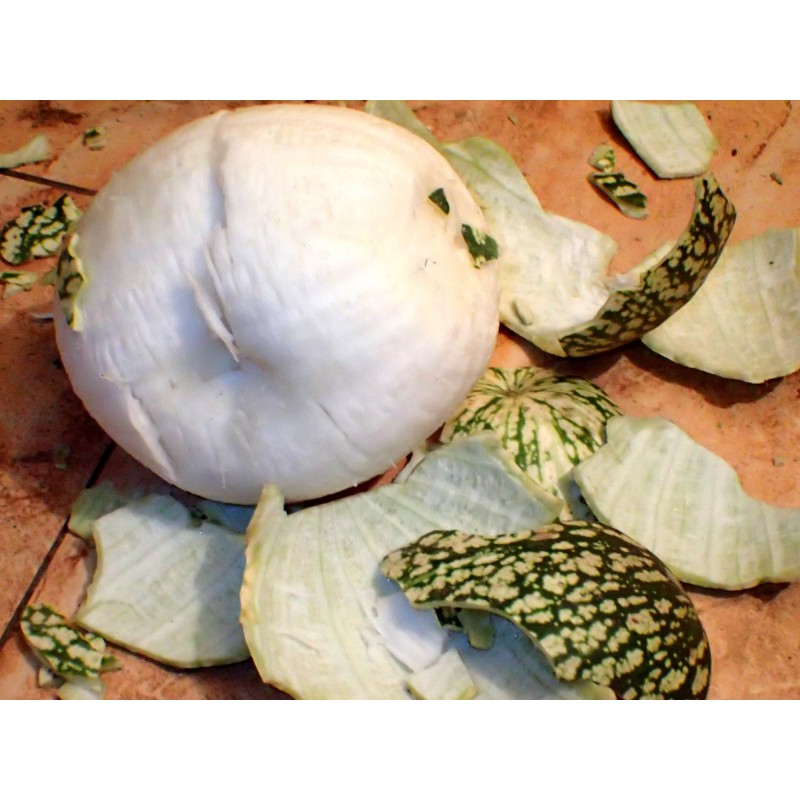
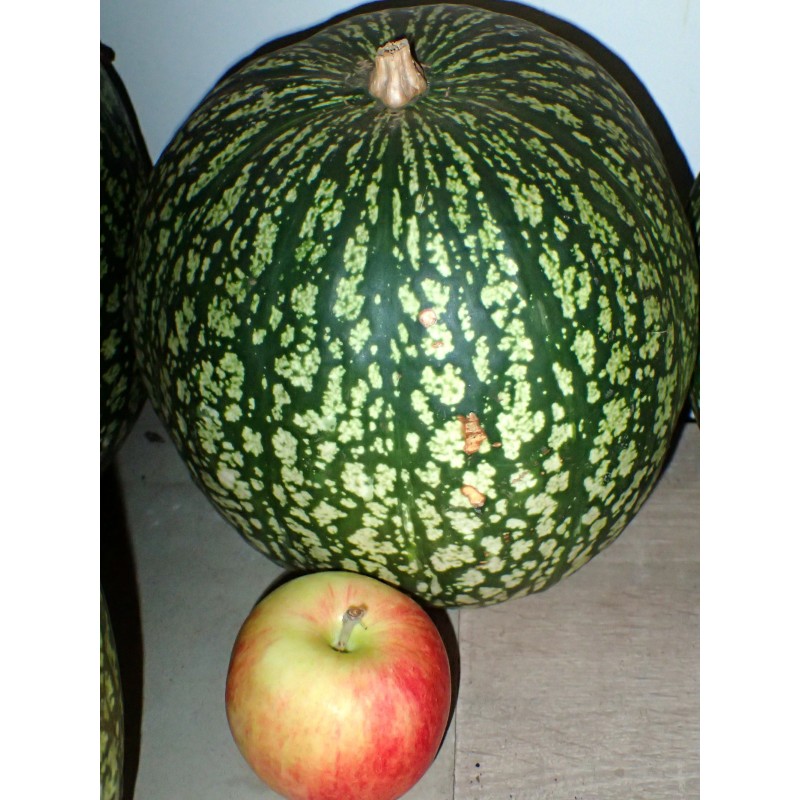
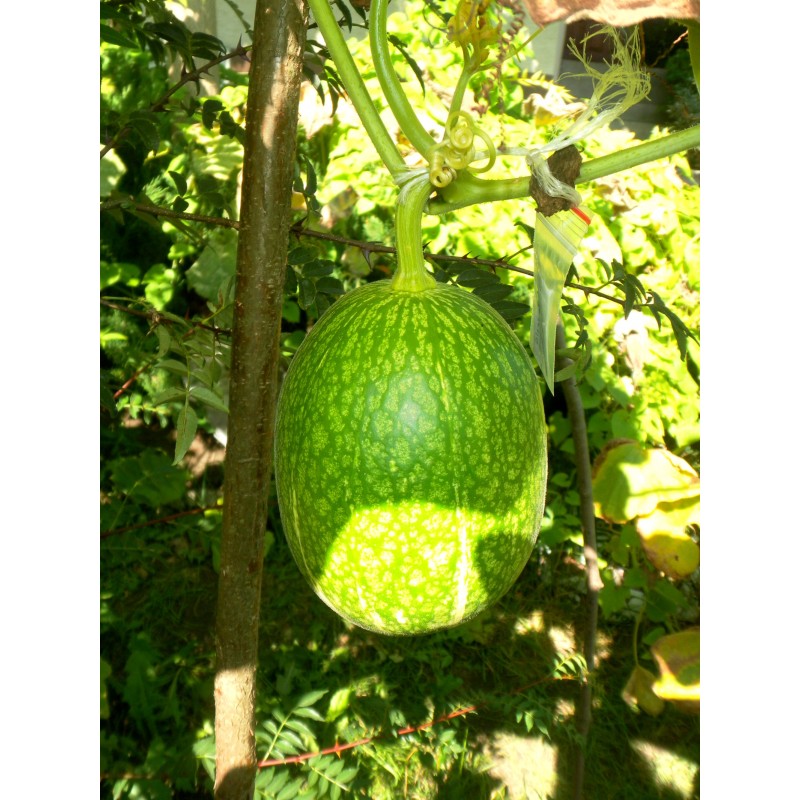
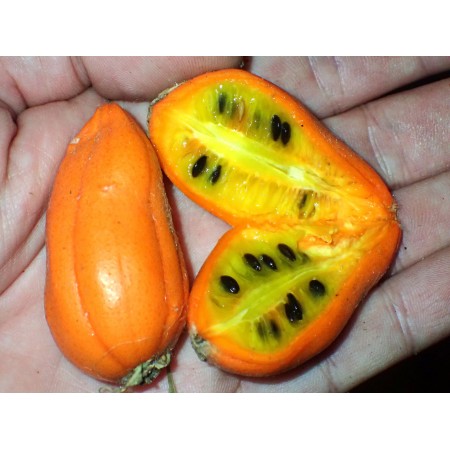
This mountainous, tropical, perennial herbaceous vine produces nearly round, green and white speckled (similar to a watermelon in appearance) or solid white, medium-sized (5-6 kg = 11-13 lbs) fruit. It is a perennial vine adapted to the temperate climate of the American mountains (from Chile to California). The plant is also cultivated in the tropics, for example, in the Philippines and India (one of its names is "Malabar pumpkin," suggesting Indian origins—which is false, as all pumpkins originate from the New World). In Europe, some people know it because cucumbers were grafted onto it (they produce better and faster fruiting and are more disease-resistant). There are many cultivated varieties of this plant. This variety has green, white-mottled, and striped skin, snow-white flesh, and black seeds, and blooms year-round (even during long days). Unfortunately, I don't know its name. Black-seed pumpkin fruit can be used similarly to other pumpkins – unripe ones are cooked like zucchini, while ripe ones are marinated in vinegar with sugar, cloves, and cinnamon (prepared this way, they have the consistency of unripe coconut because the flesh doesn't soften after cooking). The seeds, flowers, and young shoots are also edible. The plant also has medicinal properties – it lowers blood sugar levels. The variety mentioned above grew very well in our garden. It began flowering and fruiting early, producing a bountiful harvest (usually 2-5 fruits per plant). The fruits are about 20 cm long. Their shape is almost round or oval – slightly longer than wide. In our climate, it is not considered a perennial because it is frost-tolerant. Seeds can be sown outdoors in early May. The fruit can be stored for a very long time (even over two years at room temperature), and it is possible that seeds extracted in May from fruit harvested the previous autumn are not yet ripe and do not germinate. Fully developed seeds are usually uniformly black. As the name suggests, the leaves of this pumpkin resemble those of the fig tree (Ficus carica). The plant is resistant to most diseases and pests, such as fusarium wilt (which is why cucumbers are grafted onto it, and in Asia, melons are also grafted onto it). It is possible (even for an "ordinary Szymanski" – this does not require a skilled grower) to grow a hybrid of the fig-leafed pumpkin (Cucurbita ficifolia) and the giant pumpkin (C. maxima). Simply pollinate the flower of the former with the pollen of the latter (and ensure that a net is placed before and after pollination to prevent insect pollination). This is not always successful – it depends on the varieties being crossed. However, sometimes, after such controlled pollination, fruit is produced, containing fertile seeds. These seeds produce F1 hybrids with intermediate characteristics and highly decorative fruit—yellow-orange (sometimes partially green) and white speckles. This species also hybridizes with the frost-resistant pumpkin (Cucurbita foetidissima) - we also sell seeds of this hybrid (look for another offer of this hybrid in the store). The pack of 12 fresh seeds is available for sale.