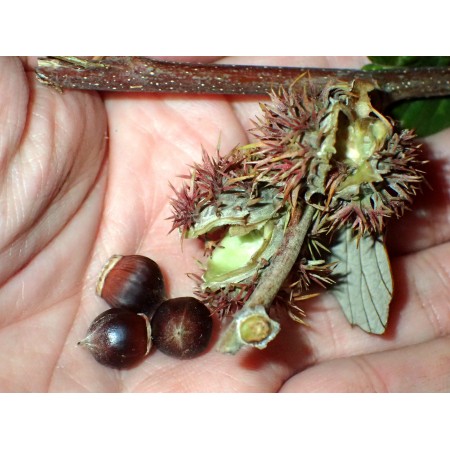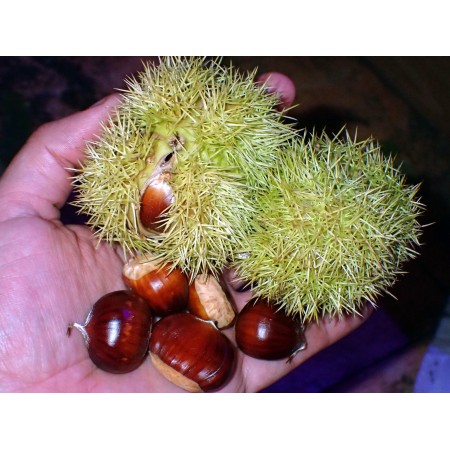
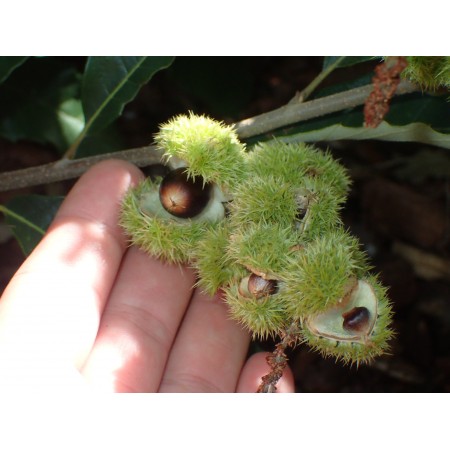
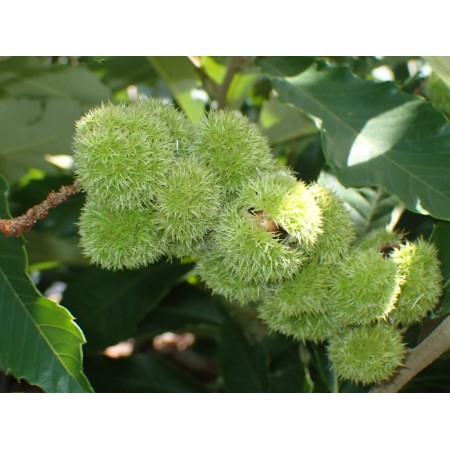
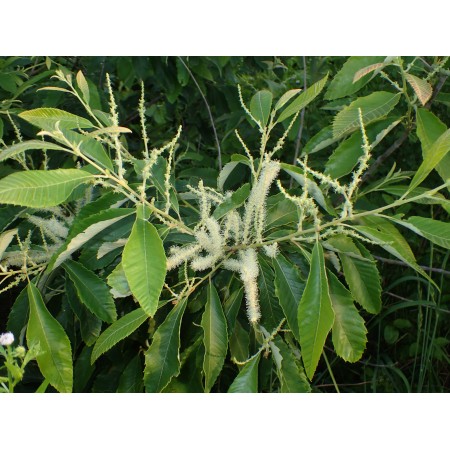
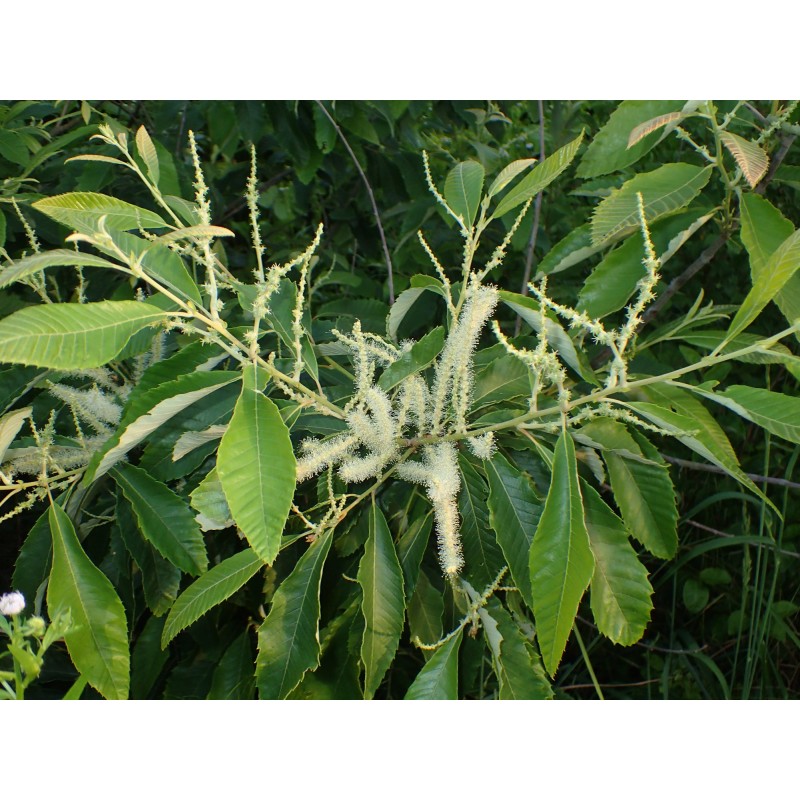

The American Chinquapin (Castanea pumila) was first described in Polish botanical literature as early as Father Krzysztof Kluk's "Plant Dictionary" in 1787 (under the name Fagus pumila – "small chestnut beech"). Father Kluk recommended its cultivation and praised the flavor of its nuts. They are exceptionally sweet and delicious, much tastier than the fruit of its European cousin, the sweet chestnut (C. sativa). The American Chinquapin also has other advantages: it overwinters well in Poland (at least some of its forms), bears fruit three to four years after sowing, and reaches a compact size for a chestnut. It is also quite resistant to chestnut blight (Cryphonectria parasitica), an Asian fungal disease that decimated the two remaining American species (American chestnut – C. dentata and, especially, Ozark chestnut – C. ozarkensis) and European sweet chestnut cultivations in the first half of the 20th century. Despite its numerous advantages, the chestnut tree is very rarely found in cultivation in Poland, or indeed in Europe. We imported some seeds from the USA and have been collecting nuts for several years.
CULTIVATION AND BRIEF DESCRIPTION:
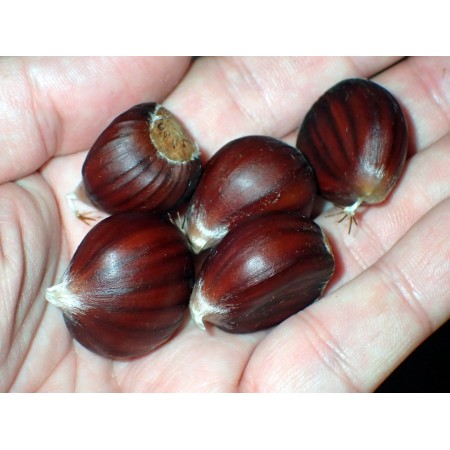
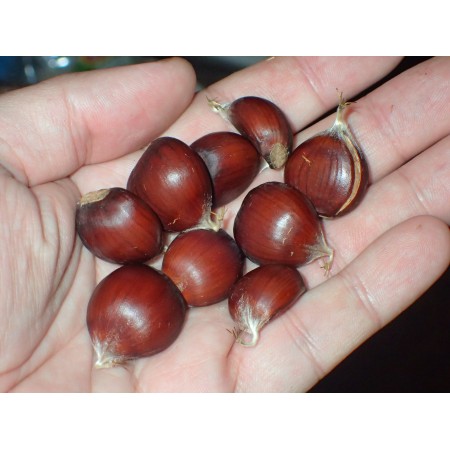
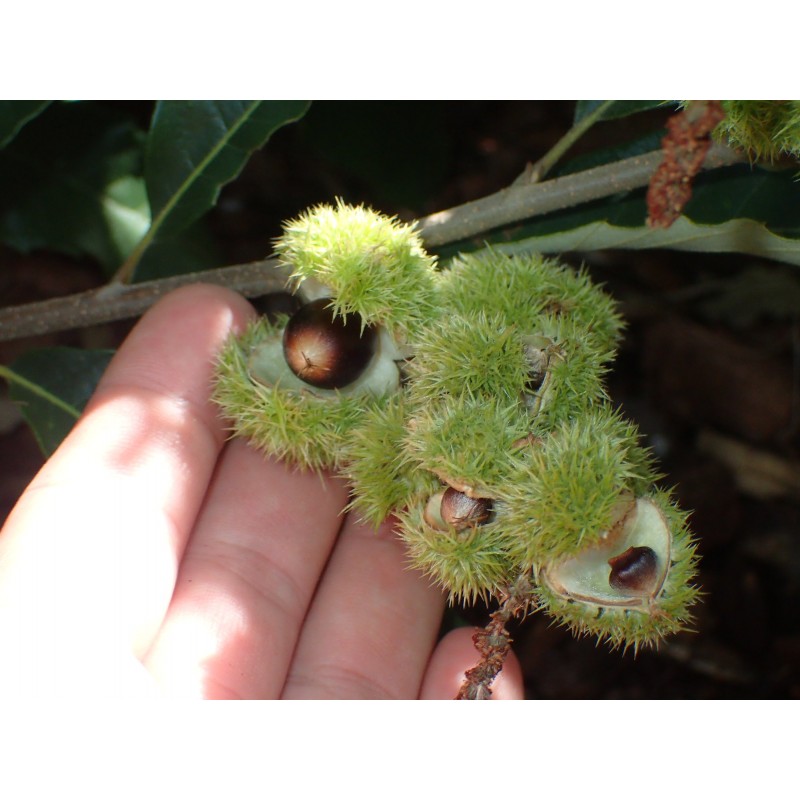
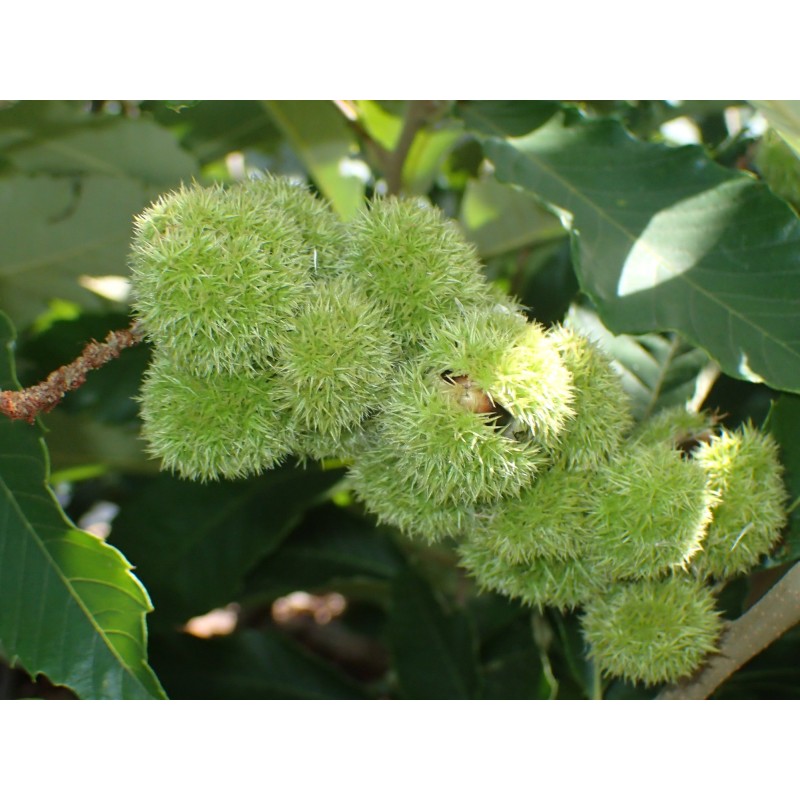
The American Chinquapin prefers clayey, slightly acidic soil, but also tolerates acidic, dry sand. It grows well as an understory in a light, pine forest. The American Chinquapin is a shrub (in Europe, up to about 2-4.5 m tall) or a small tree, forming root suckers and eventually forming dense thickets. Chestnuts (in general – all species in the chestnut genus) are monoecious, but open-pollinated – meaning that at least two specimens (grown from two seeds – not two vegetatively propagated specimens) are needed for fruiting. Our American Chinquapin bears fruit in September. Its seeds do not undergo dormancy and sprout immediately. To protect them from rodents, we pick the fruit when it begins to crack and thresh it in bags, beating it to the ground. Nuts harvested this way are viable and almost completely undamaged. The fruit of the low chestnut tree is small – 100 seeds weigh about 85 grams. However, the bushes are extremely prolific – the fruit is produced in long clusters and practically covers the plant. They are highly nutritious. 100 grams of nuts contain about 474 kcal. Sources indicate that when fresh, they contain about 5% protein, 5% fat, 38% carbohydrates, and 1.5% fiber. They are also rich in potassium and probably vitamin C. In North America, they were used as a coffee and chocolate substitute, among other things, and were also eaten fresh or baked. They do not store well when fresh. They can be stored for about two months in the refrigerator, frozen, or dried.
PROPAGATION:
It's best to sow the nuts a few days after harvest, in September, in the ground, and mulch the sowing area. If seeds are received later, sowing on a window sill or in a greenhouse yields the best results. They can also be sown in pots in a cool basement, but this can result in significant losses. It can also be grafted, for example, onto sweet chestnut seedlings. Mr. Piotr Banaszczak from the Rogów Arboretum and Anna Jankowska, a well-known breeder of chestnuts and nuts (and once also tomatoes), revealed that within the Castanea genus, there is significant incompatibility, and the scion and rootstock don't always fuse. Interestingly, hybrids (generative) are much easier to obtain.
However, when propagating chestnuts vegetatively, you can be sure to get 100% identical results. However, hybrids can occur among seedlings propagated from seed.
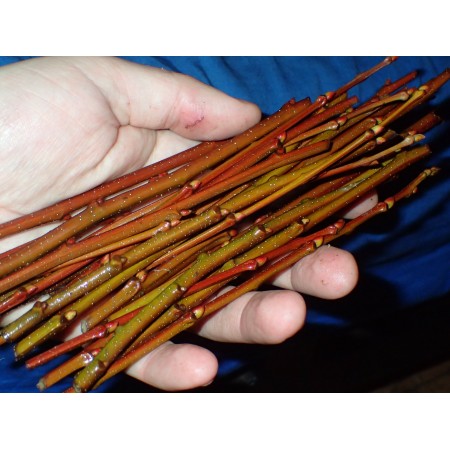
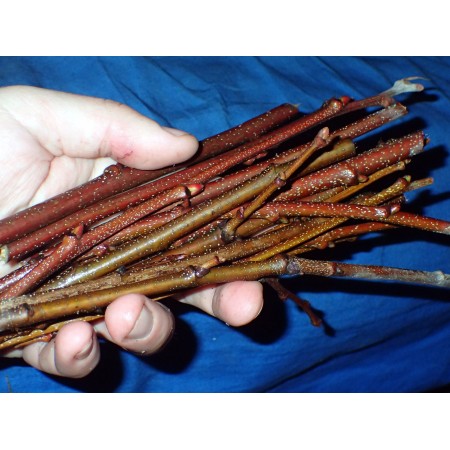
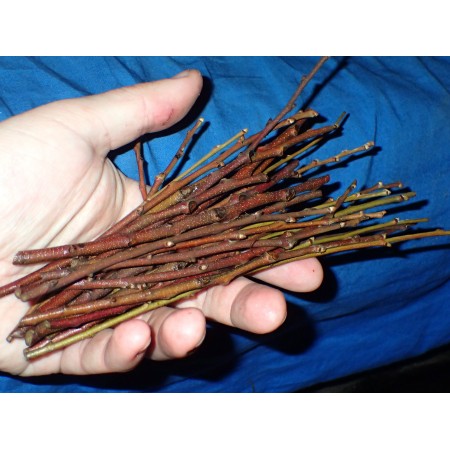
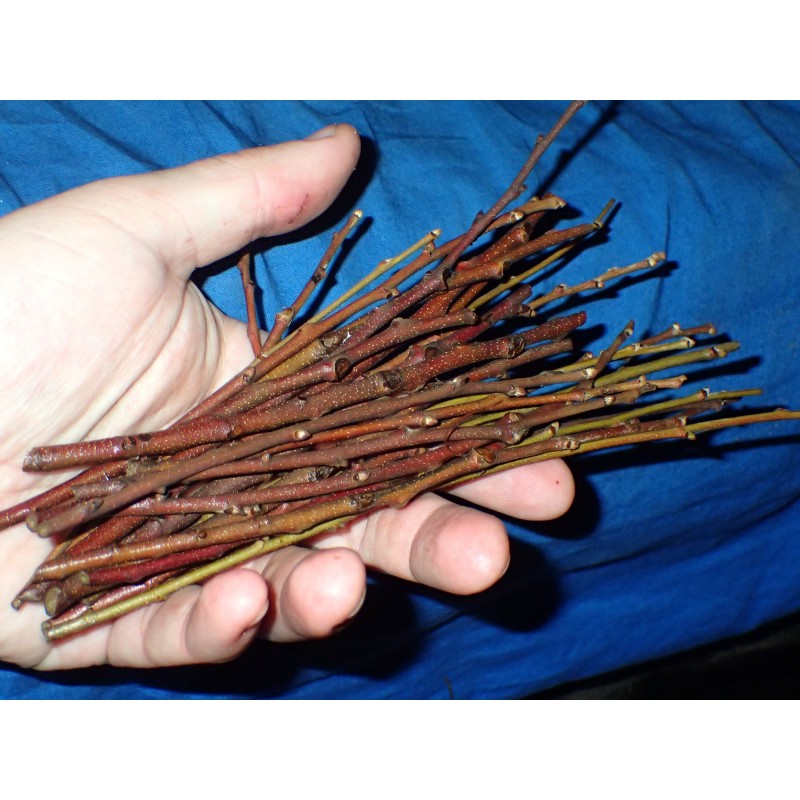
In selling package of 4 grafting sticks (scions).
We include a plant passport with the orders.
Data sheet