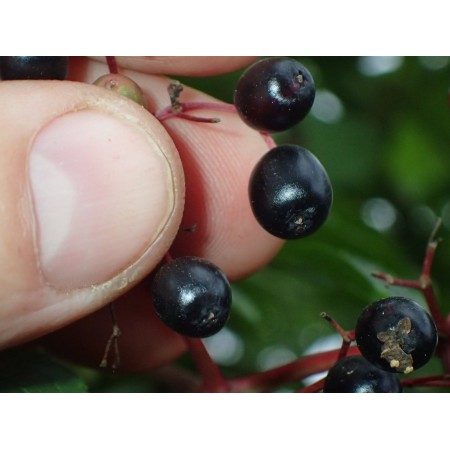
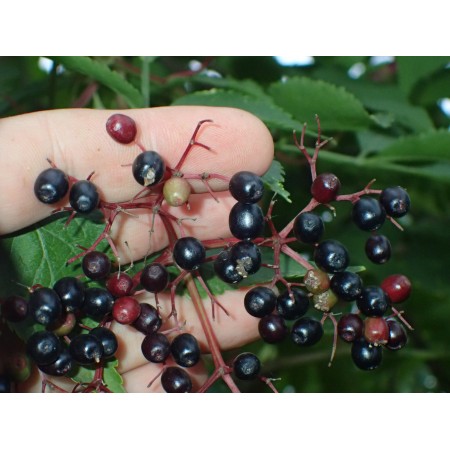
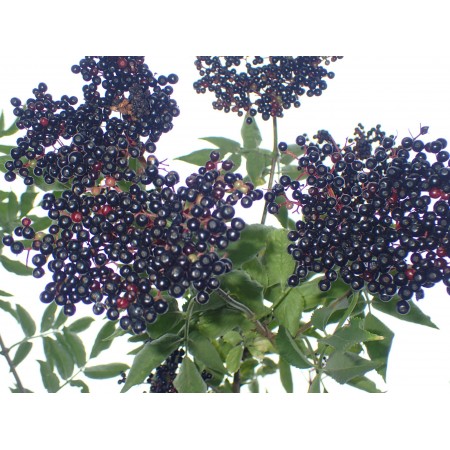
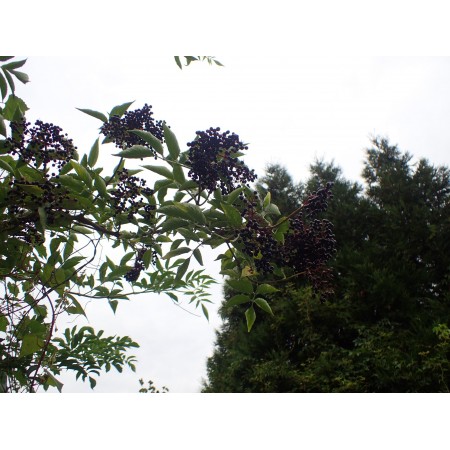
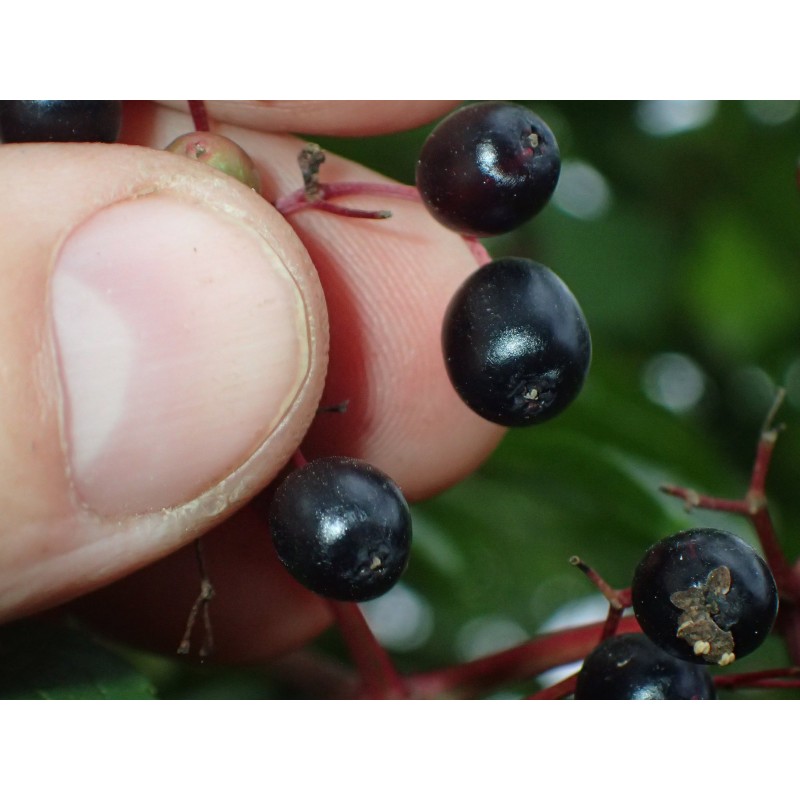
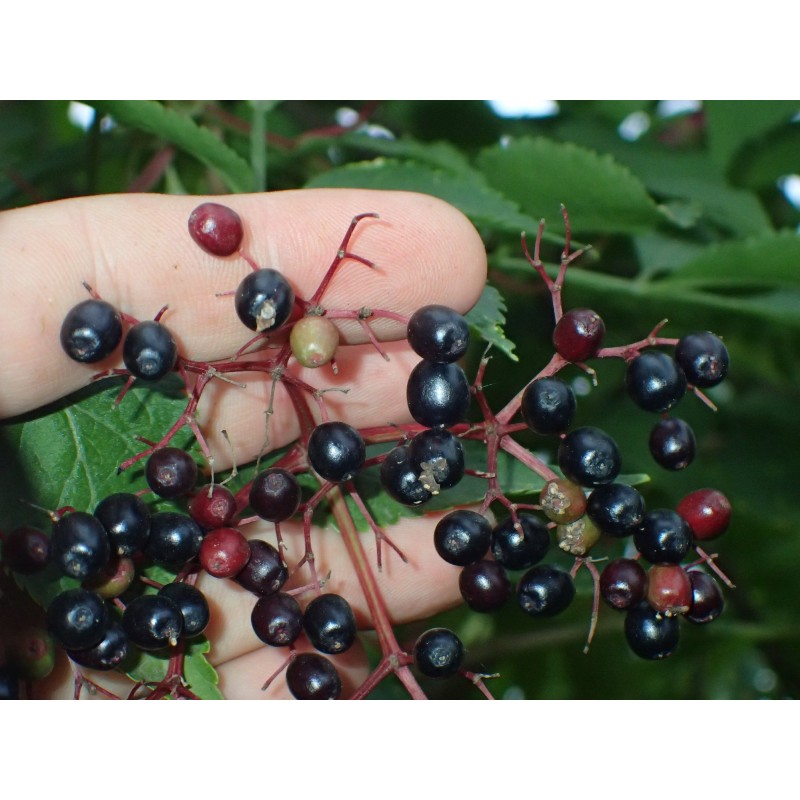
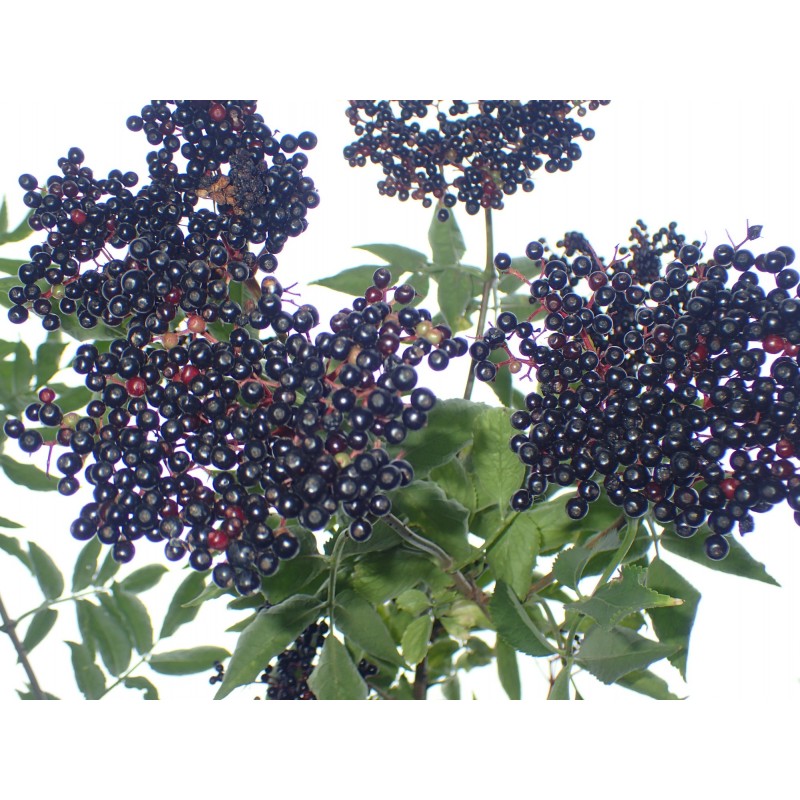
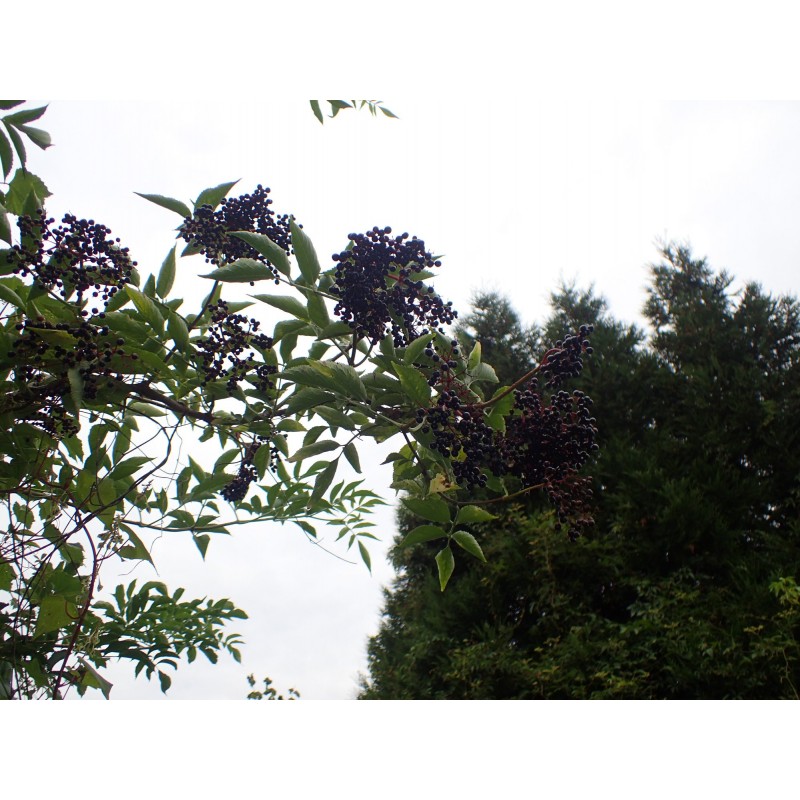
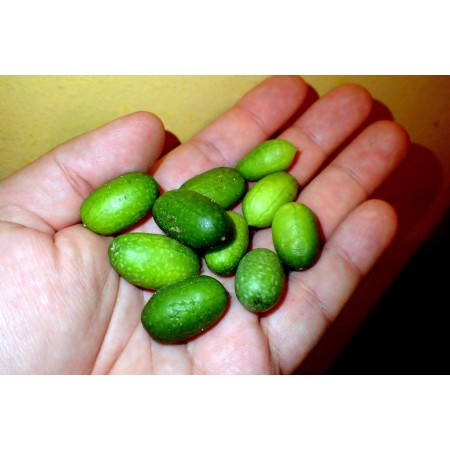
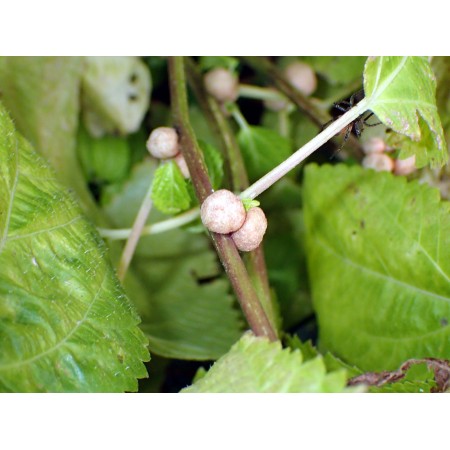
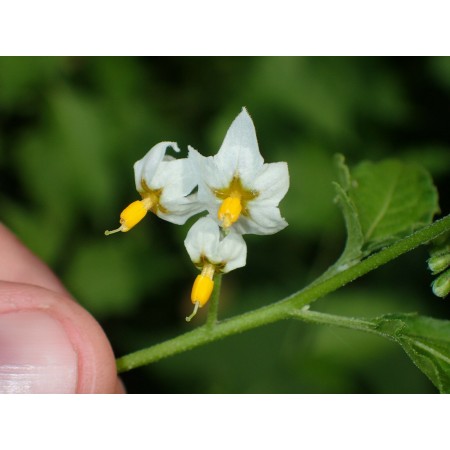
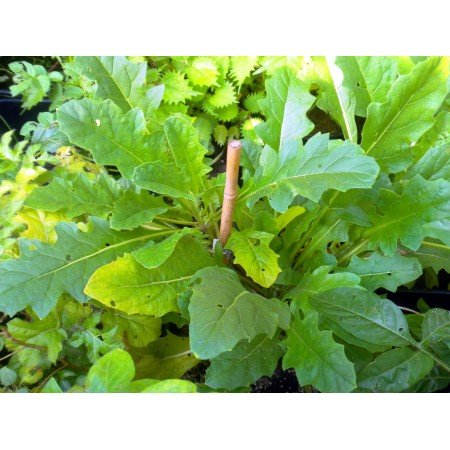
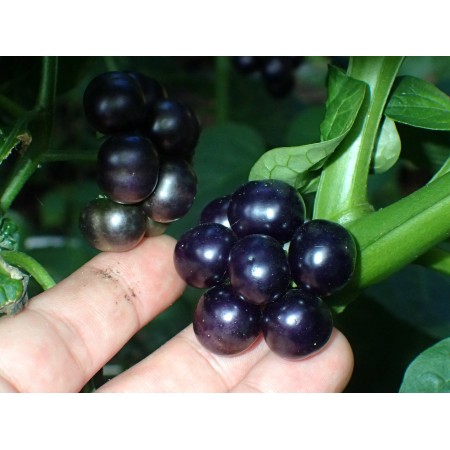
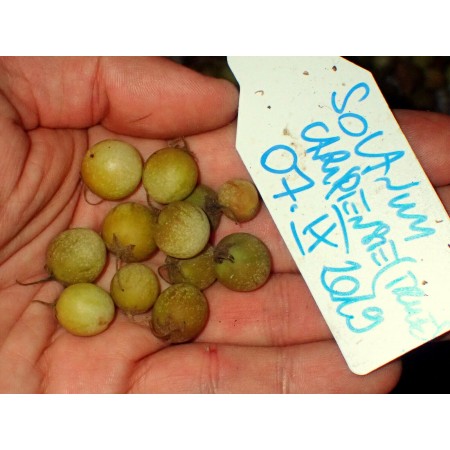
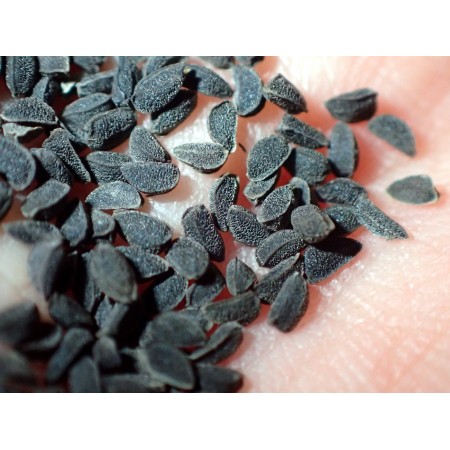
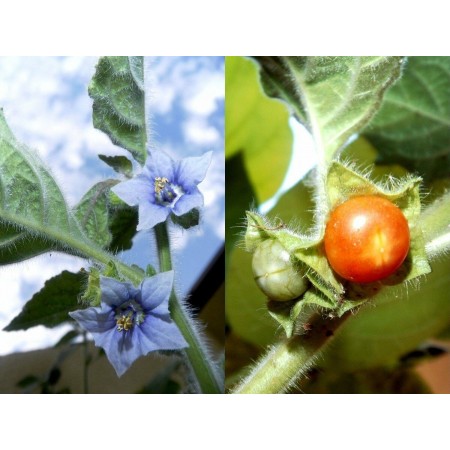
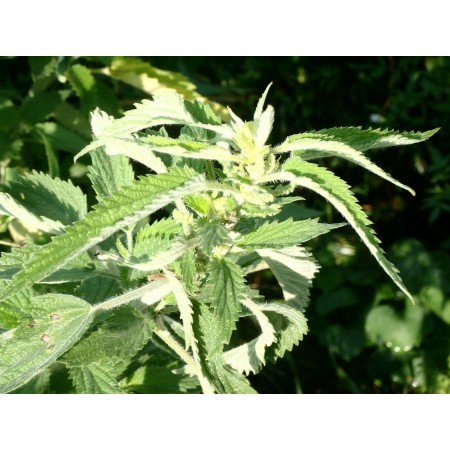
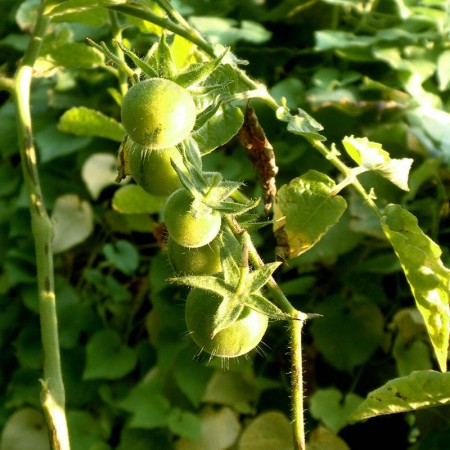
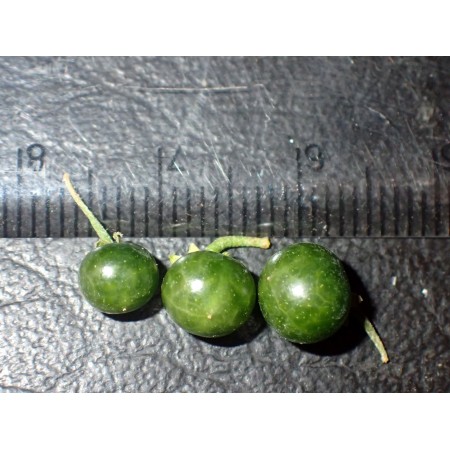
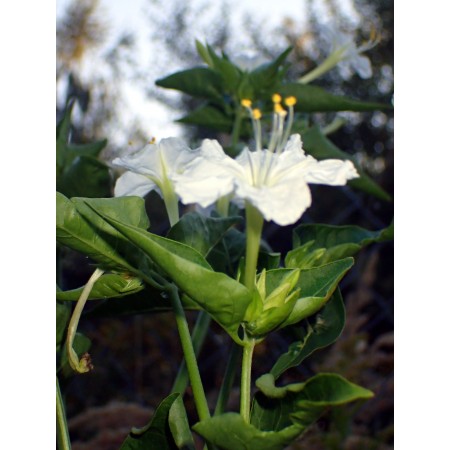
The large shrub or tree native to the mountains of South America. It produces very large fruits (the largest in the genus) that are far tastier than the common elderberry (S. nigra), lacking that characteristic "medicinal" aftertaste. When fully ripe, their aroma resembles that of the highbush blueberry. The plant produces the largest fruit when grown in moist locations (in its native habitat, it grows along rivers). However, in cooler climate zones, we recommend planting it in moderately dry spots to ensure successful overwintering (it thrives in drier sites as well). It proves surprisingly hardy in Poland, surviving winters in zones 6b/7a. It blooms and bears fruit. This elderberry species is very difficult to find in Europe. Offered here is a packet of 50 seeds (kept moist rather than dried, to better preserve viability). Sow the seeds in pots immediately upon receipt and place the pots in a cool cellar or outdoors (well-protected/covered); they will germinate in the spring. Alternatively, the seeds can be stratified in a moist substrate in the refrigerator until sprouts appear.